

As a crucial component connecting the pedals and chainring, and transmitting the rider's full power, the quality of the crankset directly determines the efficiency of power transmission. Choosing the right one means less effort uphill and faster acceleration on flat roads; choosing the wrong one will not only make riding tiring but may also cause knee pain and negatively impact the riding experience. Today, we'll break down crankset selection techniques from a practical perspective!
1. Definition and Function of Cranksets
A bicycle crankset is a core transmission component connecting the bottom bracket, chainring, and pedals. Its main function is to convert the rider's pedaling force into the forward motion of the bicycle, making it a key part of the bicycle's drive system.
2. Drivetrain Components:
The crankset is not isolated; it combines with the pedals, bottom bracket, and chainring to form a complete drivetrain kit. Therefore, their compatibility determines the quality of the transmission system.
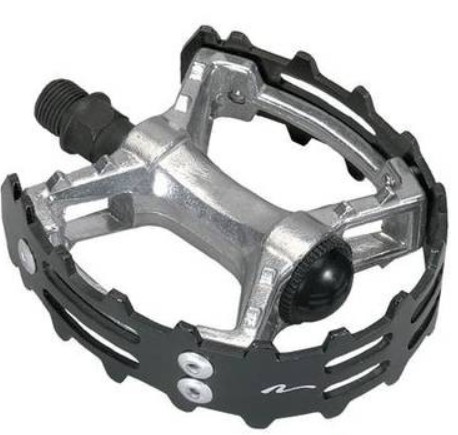
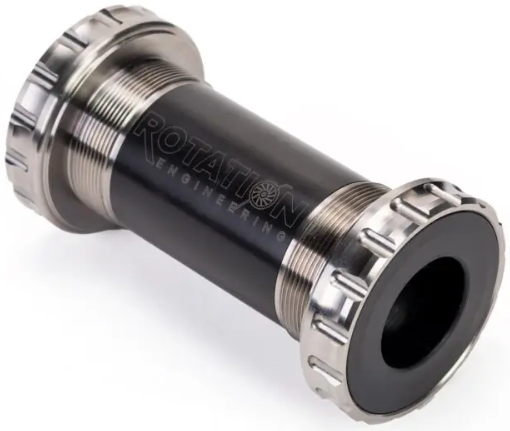
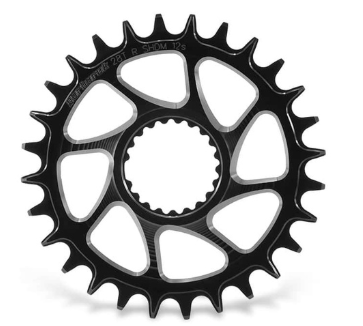
3. When choosing a crankset, consider the following factors:
a. Crank Length: Crank length directly affects the pedaling range and force application angle. Too short will result in insufficient power, while too long can easily cause knee discomfort, especially during uphill climbs.
Common specifications: 170mm, 172.5mm, 175mm (mainstream), 165mm (for shorter riders / road bikes), 177.5mm (for taller riders / mountain bikes).
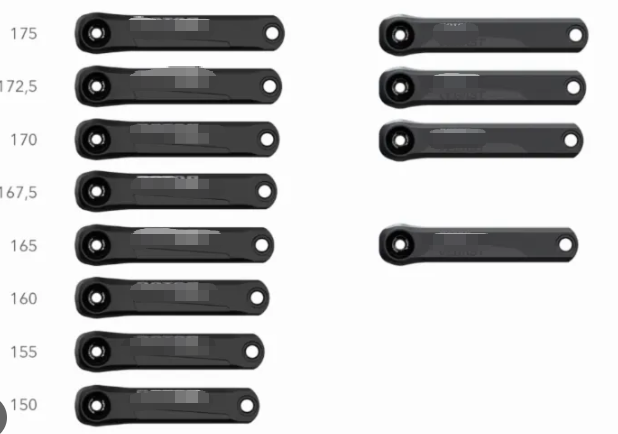
Selection principle: The taller the rider, the longer the crank length; road bikes prioritize high-frequency pedaling, so shorter cranks are preferred; mountain bikes require greater torque, so longer cranks are preferred.
b. Bottom Bracket Type: Crankset interfaces come in square taper/spline/integrated types. The interface must be exactly the same as the bottom bracket, otherwise, it cannot be installed.
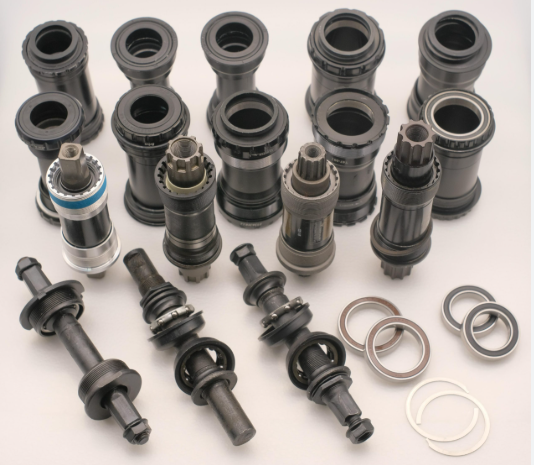
Entry-level needs (commuting, casual riding): Choose square taper/spline interface cranks, matching the corresponding square taper/spline bottom bracket, compatible with traditional threaded bottom bracket shells.
Mid-to-high-end needs (road racing, mountain biking): Prioritize hollow integrated interface cranks, matching hollow integrated bottom brackets, compatible with press-fit/hybrid bottom bracket shells of carbon fiber frames, for higher power transmission efficiency.
c. Left and Right Rotation Direction and Crank Spacing
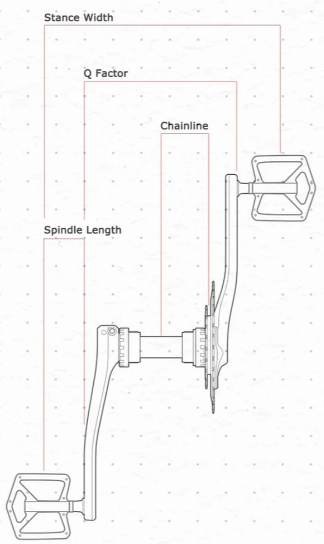
The thread direction of the left and right cranks is fixed (right side is right-hand thread, left side is left-hand thread), requiring no additional selection. However, you need to confirm the Q-factor of the crankset (the lateral distance between the two cranks) – a smaller Q-factor means your feet are closer to the centerline of the frame when riding, resulting in smoother power transfer. Road bikes prefer a smaller Q-factor, while mountain bikes require a slightly larger Q-factor for stability.
d. Material Determines Stiffness Performance
Crank materials are divided into three main categories:
- Aluminum alloy: The preferred choice for beginners, with moderate weight (approximately 200-250g per crank), resistant to bumps and easy to maintain, suitable for beginners with limited budgets.
- Carbon fiber: Advanced/competition models, lightweight (as low as 150g per crank), extremely rigid, with zero delay in power transmission, significantly improving acceleration and sprinting performance. It also has some shock absorption, making long-distance riding more comfortable.
- Steel: Exclusive to vintage models, with outstanding texture and maximum durability, but heavier. Suitable for riders who prioritize vintage style over performance.
e. The chainring gear ratio paired with the crankset directly determines the difficulty of pedaling on different road conditions.
- Light gear ratio (34/50T, 36/52T): Essential for climbing enthusiasts. Smaller chainrings reduce pedaling resistance, making it easy to conquer steep slopes, suitable for mountain biking and undulating terrain.
- Standard gear ratio (39/53T): All-rounder, balancing flat road cruising and moderate climbing, suitable for daily commuting and mixed road conditions, and the choice of most riders.
- High gear ratio (42/56T): Exclusive for flat road sprinting/racing. Larger chainrings increase maximum speed, suitable for purely flat road riding and advanced riders pursuing high-speed breakthroughs.
f. Compatibility: Ensure compatibility with your bike model to avoid "buying the wrong part."
Before purchasing, be sure to confirm the compatibility of the crankset with the hub and drivetrain. The key factors are the "BCD specification" (chainring bolt circle diameter) and the freehub type. Common BCD specifications include 110mm (road bike double chainring), 130mm (traditional road bike), and 104mm (mountain bike single chainring). If the specifications do not match, proper installation will not be possible.
